01
Agree the scope
Identify one workflow, the input versions, expected and forbidden outcomes, and the person who can accept the result.
Define one workflow, agree the evidence and criteria, then review what meets the criteria, what failed and what needs clarification. Retest the same scope after a fix.
Explore the workflow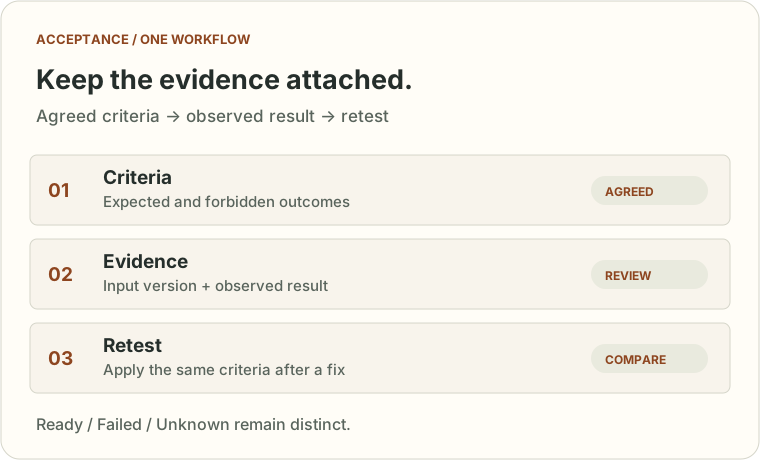
You need agreed acceptance criteria, versioned evidence and a retest after a fix.
Identify one workflow, the input versions, expected and forbidden outcomes, and the person who can accept the result.
Keep criteria and observed results together. Missing or ambiguous evidence remains Unknown.
Apply the same criteria after a fix and review the affected results again.
The Python 3.10+ local example compares supplied usage and billed-event CSV files and exports a report. Export success alone does not establish acceptance. It does not access customer systems or automatically correct live billing records.
Synthetic usage: event_id=u-001, quantity=1.
Synthetic billed event: event_id=u-001, quantity=1.
With a confirmed one-to-one event contract, matching rows can be Ready.
Missing or mismatched rows can be Failed; unconfirmed scope remains Unknown.
Acceptance depends on the agreed criteria, authorized evidence and a named reviewer. The local CSV example checks only supplied event rows under a caller-confirmed one-to-one event contract. It does not establish source completeness, accounting or tax correctness, current remote state, or business completion.
Send one exported run to hello@truquence.com with a line on what it should have done. We'll reply within 24 hours of usable files with PASS, FAIL or UNKNOWN for each of those things.
Describe the input, the outcome you need to verify and who can accept the result. Start with nonconfidential information. Leave out customer records, personal information and credentials.
Contact Truquencehello@truquence.com · Opens your email app.